
 English
 عربى
عربى
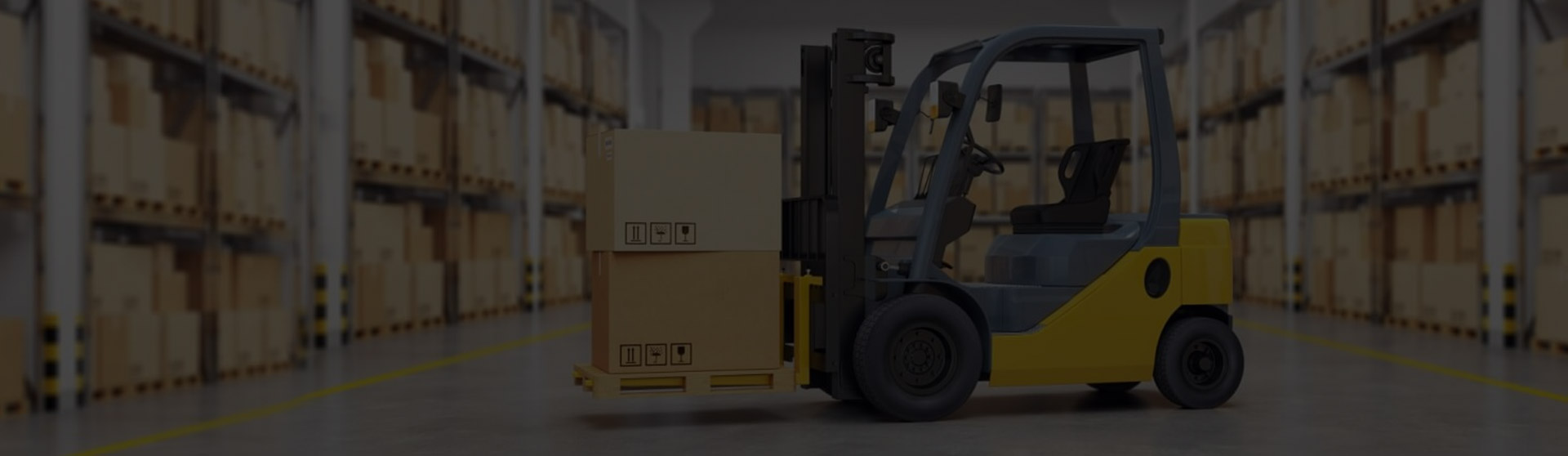

Forklifts operate daily in and out of warehouses, loading and unloading heavy goods, placing a very high workload on their forklift brake system. Many companies only realize the problem when the forklift "can't stop," which is already extremely dangerous. Aging braking systems usually give early warning signs; with careful attention, these can be detected and addressed in advance. Below are three easily overlooked but crucial signs of aging.
1. Increased Braking Distance and a "Softer" Brake Feel
This is one of the most obvious and dangerous signs.
If you find that your forklift takes longer to stop at the same load and speed, or if the brake pedal feels softer and less "crisp" than before, it's very likely that the braking system is aging.
Common causes include:
Severely worn brake pads, reducing friction
Aging brake fluid with increased water content, resulting in poor pressure transmission efficiency
Aging brake lines causing micro-leaks
These problems directly affect braking force output. Continued use can easily lead to loss of control during emergency braking.
2. Unusual Noises, Vibrations, or Burning Smells During Braking
Normal forklift braking should be smooth and quiet. If you start hearing screams, metallic scraping sounds, or noticeable vibrations in the steering wheel and forklift during braking, it's almost certain that the braking components have entered the aging stage.
Another important but often overlooked sign is an unusual odor. If you smell a burning odor after braking, it indicates that the brake pads have overheated. This could be due to: brake pads rubbing against the metal backing plate; fatigue of the return spring causing brake drag; or reduced heat dissipation capacity of the braking system. If this is not addressed promptly, it can easily lead to brake failure or even a fire risk.
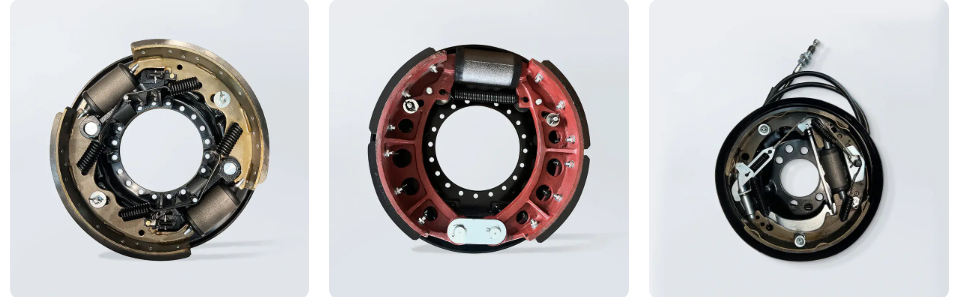
3. Slow Braking Response, Wheels Not Returning to Position After Brake Release
Many operators report a slow braking response, a "dragging" effect after releasing the brakes, and a heavy feel to the forklift. This is typically a symptom of aging internal components in the braking system.
Possible issues include:
Aging master cylinder seals
Slow return of wheel cylinders
Impurities or deposits in the brake fluid lines
Prolonged dragging braking not only increases energy consumption but also accelerates brake pad wear, creating a vicious cycle.
4. Why do forklift braking systems age easily?
The biggest difference between forklifts and ordinary vehicles lies in their high-load, high-frequency, low-speed, heavy braking environment.
Frequent starts and stops, fully loaded turns, and slope operations in warehouses all keep the braking system under high pressure for extended periods.
If this is combined with:
High dust and humidity
Long-term failure to change brake fluid
Irregular maintenance schedules
The aging process will be significantly accelerated.
