
 English
 عربى



A scrap yard we supply runs a 360-degree rotator on a 5-ton diesel counterbalance truck. Fourteen months in, that truck has burned through two sets of brake shoes and one wheel cylinder with barely 3,000 hours on the meter. No part failed because it was badly made. The rotator changed the duty cycle the truck was built around: a heavier effective load, a longer moment arm in front of the mast, more forward-reverse shuttling, and harder stops from travel speed with a full bin hanging off the carriage.
The short version: a forklift rotator is a load-handling attachment that turns or inverts the load around a horizontal axis, and once it is fitted, the truck's usable capacity, hydraulic demand, brake heat and wheel loads all shift with it. Buyers who plan for that on day one replace brake and rim parts on a schedule. Buyers who do not, replace them as emergencies.
Content
What a Forklift Rotator Actually Does
A rotator grips or supports the load and turns it: 180 degrees to dump or invert, a full 360 degrees to position, empty or re-orient. It mounts either directly on the carriage in place of the forks, or on a frame that slides over the existing tines. Both versions add a hydraulic function, several dozen to a few hundred kilograms of steel, and a load centre that sits well forward of where the truck's data plate assumes it will be.
The type you choose is driven by the load, not by the truck:
- 180-degree rotators use a single cylinder and a simple linkage for a fast dump cycle. Typical work: hoppers, waste bins, containers, compost and scrap baskets.
- 360-degree rotators offer continuous or multi-position rotation and are often paired with a clamp or drum grab for paper rolls, coils, cable reels and drums.
- Fork-mounted units slide on and off in minutes and can be shared across a fleet, but they eat capacity because the tines stay in the load path.
- Carriage-mounted units give a shorter overall length and better visibility, at the cost of dedicating one truck to the attachment.
Continuous-duty applications such as foundries, recycling and bulk handling will punish a light-duty attachment within a season. Rotation torque, not lifting capacity alone, decides whether the unit stalls halfway through a dump.
Sizing the Attachment: Four Numbers That Matter
Most rotator problems we hear about are capacity problems in disguise. Four numbers settle whether an attachment belongs on a given truck, and they have to be checked in order, because each one changes the next.
| Check | What the spec sheet gives you | What it costs when skipped |
|---|---|---|
| Residual capacity | Rated capacity, stated load centre, attachment weight at that centre | Overloading, mast stress, brake overload, disputes over damage |
| Hydraulic supply | Required flow in L/min and working pressure in bar | Slow or jerky rotation, hot oil, pump and seal wear |
| Rotation torque | Torque in Nm at a stated radius, plus duty rating | Load stalls mid-dump, cylinder bypass, seal failure |
| Carriage class | ISO or FEM class, pin spacing, hook dimensions | Mounting modification, cracked carriage bars |
Subtract the attachment weight first, re-measure the load centre second, and only then read the capacity chart. A truck rated 5,000 kg at 500 mm may handle closer to 3,500 kg with a 360-degree rotator and a bin whose centre of gravity sits 900 mm out from the carriage face. That gap is where most of the accelerated brake wear comes from.
Why the Brakes Feel the Rotator First
Every kilogram hanging forward of the mast behaves like more than a kilogram in the braking system. A rotator with a full bin pushes the centre of gravity outward, which raises the kinetic energy the brakes must convert into heat on every stop, and it does so on a truck that already shuttles between pick-up and dump positions several hundred times a shift.
The symptoms arrive in a familiar order. Pedal travel grows as lining wear accelerates. Fade appears on ramps or after repeated stops. Then the wheel cylinders start weeping, because the fluid is running hotter than the seals were designed for. If the truck already shows any of that, our breakdown of forklift brake failure causes and troubleshooting methods is a faster starting point than swapping parts and hoping.
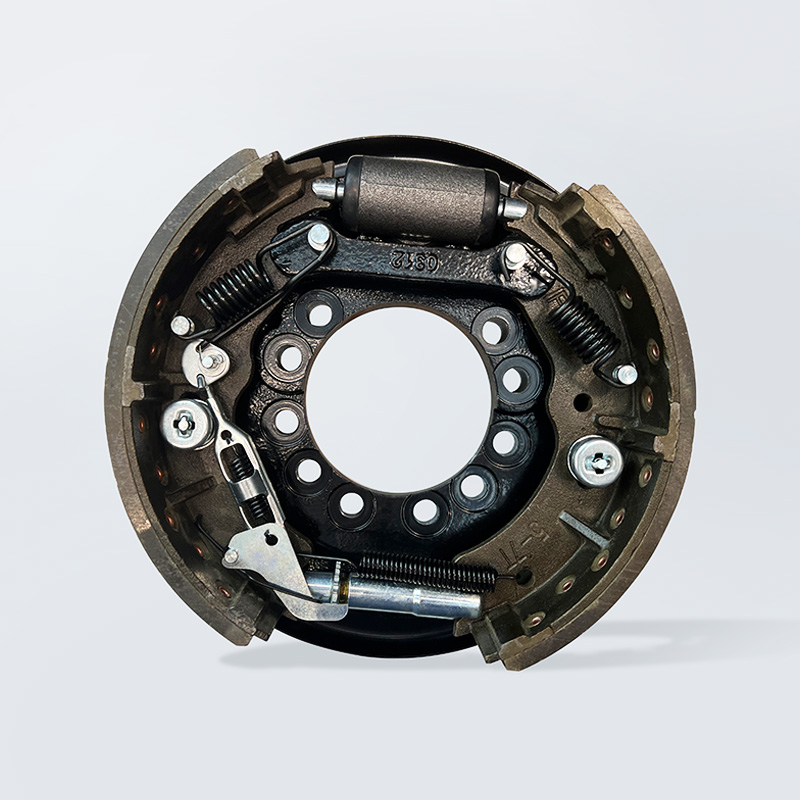 Heli 5-ton forklift brake assemblyHeavy-duty brake assembly for Heli 5-ton forklifts, with heat management and protective sealing; confirm hydraulic fade before fitting a larger brake.View Product →
A heavier-duty brake assembly is often the right answer for a rotator truck, but only after the hydraulic side has been checked. Fitting a larger brake without solving a fluid-fade problem simply moves the failure downstream.
Wear Parts Worth Keeping on the Shelf
Brake Shoes and Drums
Rotation work is hard on friction material because the truck does most of its stopping at low speed with a heavy, off-centre load. Shoes wear faster on the leading side, and an oval drum will keep destroying new linings no matter how good the lining is. Match by brand, tonnage and left or right position: a widened 5-ton shoe and a standard 5-ton shoe are not interchangeable, and the big-hole and small-hole versions of the same tonnage exist because the backing plates differ.
Cylinders and Repair Kits
Wheel cylinders are the cheapest early warning in the system. A damp dust boot means fluid has already passed the seal. On 8-10 ton trucks, single-pump and double-pump configurations take different cylinders, while a plain repair kit is often enough when the bore is clean and unmarked. Our brake cylinders for 1-10 ton forklifts are listed by fitment, tonnage and pump type, so the specification can be confirmed before an order leaves the warehouse.
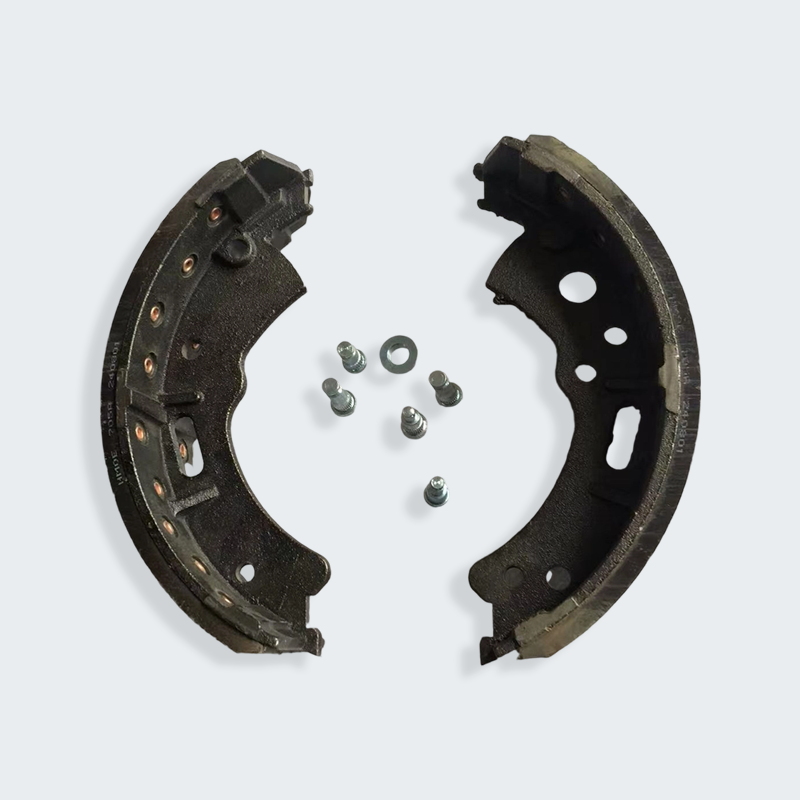 Hangcha/Heli 5-ton widened brake shoeWidened brake shoe for Hangcha and Heli 5-ton forklifts increases drum contact area to improve braking smoothness and reduce uneven wear.View Product →
For a fleet running a handful of rotator trucks, one spare shoe set, one cylinder and one repair kit per truck usually covers a planned service interval without tying up capital in parts that may never be used.
Rims and Wheels Under Rotating Load
Rotation adds torque reaction and side load that a plain fork carriage never generates. The load swings out as the attachment turns, the tyre scrubs laterally, and the rim flange and disc welds absorb stress cycles a straight lift simply does not produce. On trucks running 8.25-15 front rims or 28x9-15 dual solid wheels, hairline cracks at the disc-to-rim weld are the classic failure, and they are usually found during a tyre change after months of running.
Four points worth checking on any rotator truck:
- Flange runout and any fresh deformation at the rim edge where the tyre bead seats.
- Weld condition around the disc and hub face, especially on one-piece solid rims.
- Stud and nut torque after the first shift with a new rim, then at every service.
- Scrub marks on the tyre sidewall, which point to rim offset or a wheel set that is not matched to the axle.
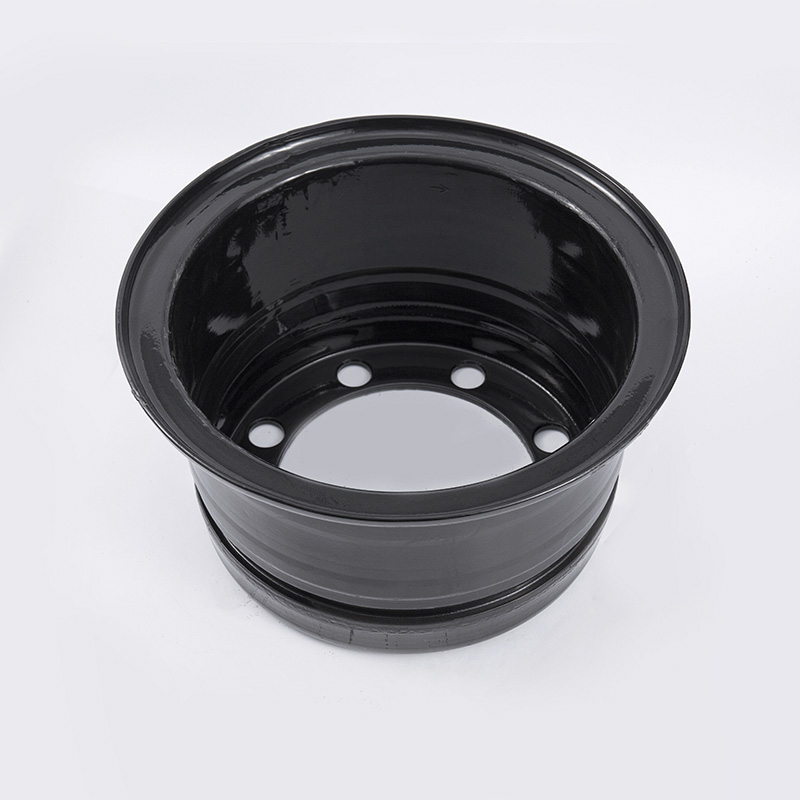 Hangzhou forklift 5-ton front wheel steel rim 825-15Single-piece forged steel rim for 825-15 tyres on 5-ton Hangzhou and Heli forklifts; confirm mounting face and offset before ordering.View Product →
Split rims and one-piece rims are not interchangeable even when the tyre size matches; the mounting face, offset and load rating differ. Ordering by rim size alone is one of the most common sourcing mistakes in this category.
A Practical Inspection Routine
Rotator trucks reward a short, repeatable check more than a thorough annual one. This sequence fits a normal shift pattern and catches most failures before they become downtime:
- Every shift: pedal free travel, fluid level, and any change in how the truck pulls up under load.
- Weekly: wheel cylinder dust boots for dampness, and hose routing near the rotator hoses for chafing.
- Monthly: shoe thickness through the inspection hole, drum condition, and rim weld check with the wheels off the ground.
- Monthly: hydraulic oil temperature after a normal cycle; a sudden rise usually means the attachment is oversized for the flow available.
- Every 500 hours: torque check on rim nuts, carriage pins and the attachment mounting bolts.
- Annually: full brake rebuild if the truck runs continuous rotation duty, regardless of how the linings look.
Buying Replacement Parts Without Guesswork
Rotator trucks tend to be the hardest-working machines in a fleet, which makes the parts side simple to get wrong. A rotator does not create a new category of brake or rim; it accelerates the wear on the parts already there. The ordering rule is to buy against the truck's data plate and the attachment's load chart, not against whatever was fitted last time, because a second-hand attachment fitted by a previous owner can leave a truck running the wrong shoes, the wrong cylinder bore or the wrong rim offset for years.
The parts side is where a supplier's range matters. Operated from Hangzhou since 1998, the business behind this site keeps more than 20,000,000 pieces in stock across a 10,000 square metre warehouse, covering 1-10 ton internal combustion trucks and battery models, with fitment catalogues for Hangcha, Heli, Lonking, Toyota and Komatsu machines. Brake assemblies, shoes, cylinders and repair kits sit alongside three families of steel rims, and customized service is available where a standard item does not match the application. For a fleet that mixes rotator duty with ordinary handling work, that breadth means one purchase order can cover the whole brake and wheel side of a service.
The practical takeaway is simple. Size the rotator against residual capacity and hydraulic flow before it goes on the truck, then treat brakes and rims as consumables on a shorter clock. That combination keeps the truck working and keeps the parts bill predictable.
