
 English
 عربى



Fork positioners look simple until the first load test. A hydraulic fork positioner lets the operator spread, narrow, or side-shift the forks from the seat, cutting manual handling on mixed pallets and awkward loads. It suits warehouses, lumber yards, concrete products, and rental fleets that change pallet widths several times a shift. The payback is real, but it depends on four checks: residual capacity, carriage fit, hydraulic supply, and the extra load placed on brakes, tires, and rims. Buyers who run those checks before ordering avoid the common mistake of buying an attachment that fits the carriage but overloads the truck.
Content
- 1 What a Fork Positioner Actually Does
- 2 Capacity Loss and Load Center: The Numbers That Decide Fit
- 3 Hydraulic Supply and Control Layout
- 4 Brake and Wheel Loads Do Not Stay the Same
- 5 Carriage, Fork, and Visibility Checks
- 6 Commissioning Checklist for a New Fork Positioner
- 7 Where a Fork Positioner Pays Back, and Where It Does Not
- 8 Procurement Notes for Wholesale and Fleet Buyers
What a Fork Positioner Actually Does
A fork positioner is a forklift attachment that moves the forks laterally on the carriage. Basic units spread and retract the forks; side-shifting versions add a left-right offset. Hydraulic cylinders do the work, controlled from the cab, so the operator does not leave the seat to re-pin or drag heavy forks.
The benefit is repeatability, not just speed. When a driver handles a 1,200 mm pallet, then a 1,000 mm pallet, then a block of concrete products, spacing can be set to the load instead of forcing the load to fit the forks. That reduces pallet damage, improves stability, and lowers the risk of poor fork entry.
Typical tasks that justify the attachment
- Mixed pallet widths change several times per shift.
- Operators frequently handle block, brick, timber, or concrete products.
- One truck is shared across several production or yard areas.
- Manual fork adjustment is a known strain or near-miss risk.
Capacity Loss and Load Center: The Numbers That Decide Fit
A fork positioner is carried on the carriage, so its weight is part of the load. That sounds obvious, but approval often stops at “Will it fit?” instead of “What can the truck still lift?” The attachment moves the effective load center forward, and the data plate must be derated for the attachment, fork length, and actual load shape. A truck that handles a 5 t load without an attachment may not handle the same load with a positioner at the same load center.
| Change | Practical effect | What to verify |
|---|---|---|
| Attachment weight | Reduces residual capacity | Derating chart at the actual load center |
| Load center shift | Lowers the safe lifting limit | Rated capacity with attachment and fork length |
| Carriage and fork extension | Raises front-axle load | Axle rating, tire capacity, rim rating |
| Hydraulic demand | Adds heat and flow load | Pump flow, relief setting, oil cooler, cycle time |
| Braking duty | More mass to stop | Brake condition, cylinder function, lining wear |
Use the attachment supplier’s weight and derating chart, not a generic percentage. On heavier trucks, added attachment mass also raises braking duty. If a brake assembly is being renewed at the same time, match tonnage, left or right side, and pump type rather than ordering by appearance.
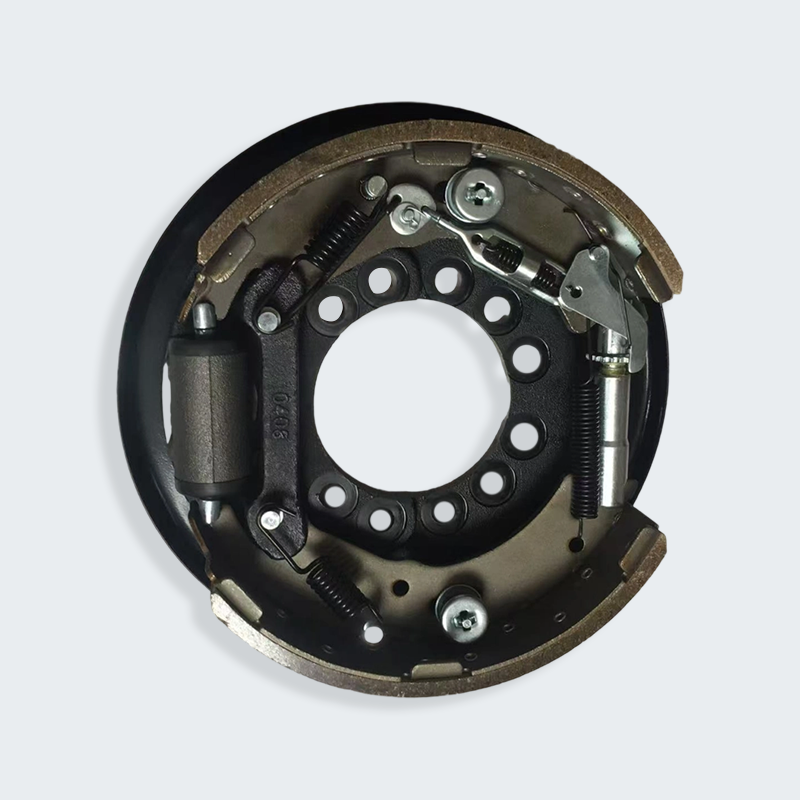 Hangcha 5–7 Ton Left Brake AssemblyFor Hangcha 5–7 ton trucks, this left-side brake assembly should be matched by tonnage, side, and pump type when brake renewal is due.View Product →
Hydraulic Supply and Control Layout
A fork positioner needs its own hydraulic circuit, valve section, and return path. Do not tee into the brake circuit. Brake hydraulics are a safety system; attachment hydraulics are a work function. Sharing lines can change pedal feel, trap pressure, or create a leak path between systems that were never designed to interact.
Check pump flow at operating temperature, relief setting, hose size, and oil-cooler capacity. A positioner that cycles slowly may be starved of flow; one that overheats the oil may have a return-line restriction. Route hoses so they cannot rub on the carriage, mast, or tires through full spread and side-shift. Leave slack for articulation, but not enough to catch on a pallet.
A pressure test beats guesswork
Test at the attachment, not only at the pump. Record pressure at full spread, full retract, and hold. If the forks drift under load, inspect the valve, cylinder seals, and hose couplings before adjusting the relief. Raising pressure to hide a leak adds heat and stress to the whole system.
Brake and Wheel Loads Do Not Stay the Same
Adding mass to the carriage changes more than steering feel. The front axle carries more static and dynamic load; tires, rims, and wheel fasteners see higher stress; and the brake system has to stop a heavier combined machine. On a truck used for long shifts with frequent direction changes, small increases in attachment weight and load center can shorten lining life and expose a weak wheel end.
Start with a brake inspection that covers pedal travel, brake cylinder operation, shoe wear, drum condition, and parking brake hold. Then check rim condition, stud torque, and tire pressure against the axle load. A rim rated only for the standard truck configuration may not be suitable once the attachment and load are added. If brake parts are due, match the assembly to the truck series and side, not just the tonnage.
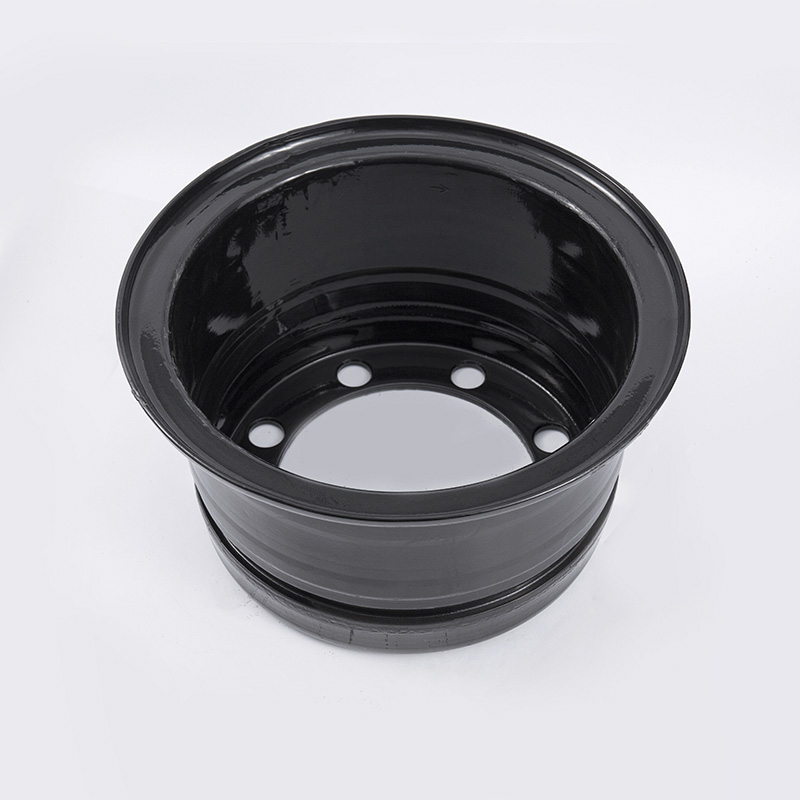 Hangzhou 5-Ton Front Wheel Solid Steel Rim 825-15For 5-ton front-wheel use, check rim size, mounting face, and stud pattern; this 825-15 solid steel rim is intended for 5-ton forklifts.View Product →
For a 5 t front-wheel application, confirm rim size, mounting face, and stud pattern before ordering. A visual match is not enough when the wheel end is carrying attachment load.
Carriage, Fork, and Visibility Checks
A positioner is only as good as its mounting interface. Confirm carriage class, hook type, pin spacing, and approved fork thickness. The attachment must sit square and move without binding through the full stroke. Worn fork heels, bent carriage bars, or mismatched pins can make a new positioner feel faulty when the real problem is the carriage.
Check from the operator’s seat
- Fully retracted and fully spread forks must not trap hands or hoses.
- Load backrest height must still support the load.
- Cylinders and hose loops must not block the load or the right-hand sight line.
- Fork tips should remain visible enough for pallet entry.
If the attachment blocks the right-hand sight line, add mirrors or a camera rather than asking the operator to work around it.
Commissioning Checklist for a New Fork Positioner
Commissioning is where a good purchase becomes a reliable tool. Use a written checklist and keep a copy with the truck’s service file.
- Update the capacity plate and operator instructions with attachment weight and derated capacity.
- Set relief pressure to the attachment specification and confirm flow at operating temperature.
- Cycle full spread, full retract, and side-shift at least ten times; check hose rub and cylinder drift.
- Inspect brake function, parking brake hold, tire pressure, and wheel fastener torque after the first shift.
- Train operators on the new load center, fork spacing, and the rule against using forks as a crowd or push tool.
Repeat the torque and leak check after the first week. Most early problems show up as a weep at a fitting, a chafed hose, or a fork that drifts while holding a load.
Where a Fork Positioner Pays Back, and Where It Does Not
The best candidates share three traits: frequent width changes, a trained operator group, and enough residual capacity to carry the attachment without sacrificing the payload. A warehouse moving standard pallets may gain little; a concrete products yard that switches between block sizes may gain hours every week.
- Strong fit: mixed pallet widths, block products, timber, and rental fleets with varied loads.
- Conditional fit: high-load-density work where derating reduces payload; calculate trips, not just cycle time.
- Weak fit: one standard pallet size, steady loads, and no manual fork-adjustment bottleneck.
Run payback on labor and damage, not attachment price alone. If the truck loses 300 kg of capacity and typical loads sit near the limit, the saving may become a second trip. If the positioner removes two manual fork moves per cycle and cuts pallet damage, the case is usually stronger.
Procurement Notes for Wholesale and Fleet Buyers
Fleet buyers should request the attachment weight, derating chart, hydraulic schematic, seal-kit part numbers, and recommended spare hoses. A positioner can be serviced only if cylinder seals, pins, bushings, and hose assemblies are available within the same lead time as the truck’s other wear parts.
The same discipline applies to the rest of the front end. Brake assemblies, shoes, cylinders, repair kits, and steel rims should be catalogued by truck series, tonnage, side, and mounting detail. For buyers consolidating brake and wheel-end parts, forklift brake assemblies and repair kits are a practical starting point. Share the truck data plate and attachment specification with the supplier before confirming the order.
For an unusual carriage or hydraulic layout, ask for a fitment review before purchase. Photos of the carriage, fork-spacing measurements, and valve layout are more useful than a model name alone; send them through the contact page.
A fork positioner is a system decision, not a bolt-on accessory. Confirm residual capacity, carriage interface, and hydraulic supply first; then inspect the brake system and wheel ends for the extra duty. Get those four items right, and the attachment can reduce manual handling and pallet damage without turning a good truck into an overloaded one.
