
 English
 عربى


Two brake assemblies leave the same warehouse, both sold for a "3-ton forklift". One bolts straight onto a Hangcha X30 hub. The other will not clear the anchor plate on a Heli K-series truck, and the fitter finds out halfway through a shift. The load rating matched; the model did not.
A forklift model is not one number. It is four identifiers stacked together: the brand series code, the load class, the brake hardware layout, and the left or right mounting side. When all four line up, the part fits the first time. When one is missing, the counter ends up with a return and a truck sitting idle.
This guide breaks down how model designations work across the 1.5 to 10 ton range, where a single load class splits into incompatible assemblies, and what to record before a purchase order goes out.
Content
- 1 What a Forklift Model Number Actually Contains
- 2 Load Classes and What They Change Downstream
- 3 Same Load Class, Different Hardware
- 4 Matching a Model to a Part When the Truck Is Not in Front of You
- 5 Mixed Fleets: Build the Cross-Reference First
- 6 Steel Rims Follow the Same Model Logic
- 7 Checking Fit Before the Order Ships
What a Forklift Model Number Actually Contains
Model codes look arbitrary until the pattern appears. On most Asian-built internal combustion trucks they carry three layers of information, and every layer changes the part you need.
The series prefix
Hangcha numbers trucks through A, X and R families — A15 and A20 at the light end, X25 and X30 in the middle, R30, R450, R550 and XR460 further up. Heli uses K-series codes such as K38 and K45 alongside plain tonnage naming. Toyota's 7F and 8F generations are two distinct brake layouts, not two names for the same chassis. A series prefix tells you the generation of the chassis, and the generation tells you which brake architecture sits behind the wheel.
The load class digits
The number in the code usually quotes nominal capacity in tonnes: A15 is a 1.5 ton truck, X30 is 3 ton, R550 is 5.5 ton, and LG50 sits in the 5 ton class. Above roughly 8 tons, manufacturers stop publishing a single figure and group machines as "8-10 ton", because those trucks share one brake architecture and often one double-pump cylinder.
The configuration suffix
This is the layer buyers forget. Double pump or single pump. Handbrake drum or service brake. Big hole or small hole anchor plate. Standard or widened. And, always, left or right. A suffix such as "double pumps" changes the cylinder, the shoe width and the hose routing at the same time.
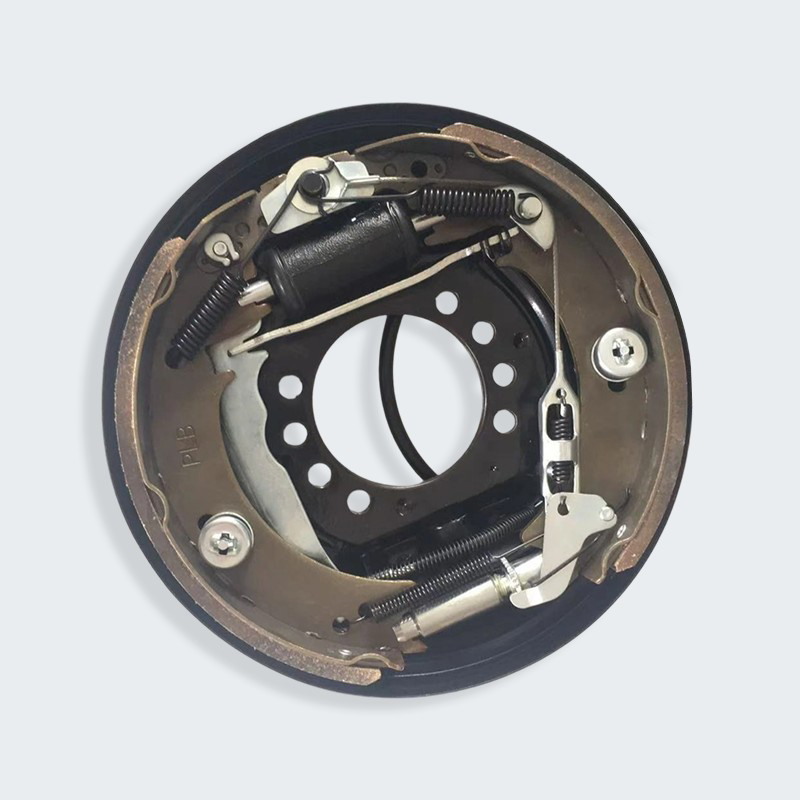 Hangcha X30 3-Ton Left Brake AssemblyLeft-side brake assembly for X30 series 3-ton forklifts, intended for routine inspection and replacement to reduce downtime in warehouse and production-line handling.View Product →
Load Classes and What They Change Downstream
The table below maps the load classes seen in parts catalogues against the hardware that usually follows them. Read it as a filter, not a confirmation: it narrows the shelf you should be searching.
| Load class | Series codes you will meet | Brake hardware that follows | The mistake to avoid |
|---|---|---|---|
| 1.5 – 2 ton | A15, A20, Heli 1.5 / 2 ton, Toyota 7F 2 ton, Tailift 1.5 ton, Liugong electric 1.5 ton | Narrow shoes, single-pump cylinders, compact repair kits | Assuming an electric truck uses the same casting as the diesel version |
| 2.5 – 3.5 ton | X25, X30, R30, A30, 30HB, Heli 3 ton, K38, Toyota 8F 2-3 ton, Komatsu 3 ton, Tailift 3 ton | Single or double pump depending on chassis, wider shoe options | Big-hole and small-hole anchor plates under one tonnage label |
| 4.5 – 5.5 ton | R450, XR460, R550, Heli 4.5 / 5 ton, new-pattern Heli 5 ton, LG50 | Widened cylinders, wider shoes, heavier drums | Treating "widened" as a synonym for standard |
| 6 – 7 ton | 5-7 ton families across Hangcha and Heli, LG50 | Drum handbrake, heavier hydraulic circuit | Ordering a handbrake assembly when the service brake failed |
| 8 – 10 ton | A100, CPCD100A, Heli 8-10 ton | Double-pump cylinders with larger bore | Single-pump and double-pump versions sharing one tonnage badge |
Same Load Class, Different Hardware
Two trucks can share a capacity badge and share almost nothing underneath. The variations repeat often enough to list.
- Single-pump and double-pump assemblies are not interchangeable, even on the same tonnage. The double-pump version drives two cylinders and uses a wider shoe.
- Big-hole and small-hole anchor plates appear within one Tailift 3 ton chassis family. The bolt pattern decides the fit, not the tonnage.
- Widened versions exist for 4.5 ton and 5 ton trucks and for 5-7 ton LG50 machines. A standard shoe dropped into a widened drum leaves a gap at the edge, and the driver reports a long pedal.
- Handbrake drum assemblies on 6-10 ton trucks are a separate part from the service brake. Ordering one for the other is a routine mix-up on heavier machines.
- Electric trucks use their own castings. A Liugong electric 1.5 ton front brake is not the same part as its internal combustion equivalent.
Wear-level parts follow the same split. Brake shoes are sold per side, repair kits bundle the cups, seals and boots for one axle end, and cylinders are matched to the pump layout rather than to the badge. If the complaint is pedal behaviour instead of fitment, work through forklift brake failure causes and troubleshooting steps before any part is ordered.
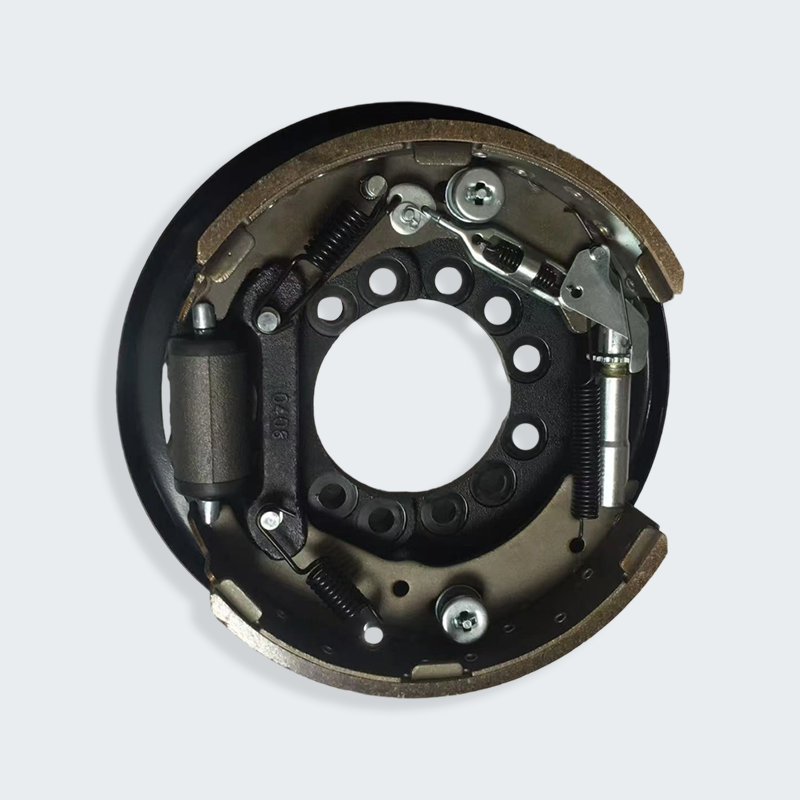 Heli 5–7 Ton Left Brake AssemblyLeft-side brake assembly for Heli 5–7 ton forklifts, built for heavy-load handling and frequent stop-start duty with reinforced wear-resistant construction and convenient maintenance.View Product →
Matching a Model to a Part When the Truck Is Not in Front of You
Most wholesale orders are placed from a desk, with the truck several hundred kilometres away. Five checks close most of the gap.
- Photograph the data plate and the old assembly from both sides, including the hose entry point.
- Count the pump outlets on the cylinder, or measure the bore if the casting is unmarked.
- Measure shoe width and drum diameter. "Widened" is a dimension, not a marketing word.
- Confirm the mounting side. Left and right assemblies are mirrored castings and cannot be swapped.
- For wheel work, record the rim size code and whether the rim is split or one-piece before anything else.
The brake assembly range is organised exactly along these lines — brand first, then tonnage, then side and pump layout — so a match can be confirmed from photographs rather than from memory.
Mixed Fleets: Build the Cross-Reference First
A depot running Hangcha, Heli, Toyota and Tailift trucks side by side cannot order by tonnage alone. The workable method is a single internal sheet, one line per machine, holding the fields that actually move the part number:
- Brand and full series code, not just the capacity figure
- Year or generation, since 7F and 8F Toyota brakes differ
- Pump layout and cylinder bore
- Shoe width and drum diameter
- Left or right mounting position
- Rim size code and construction type for tyre and wheel orders
Once that sheet exists, a reorder becomes a lookup instead of a conversation. It also exposes false substitutions: a 5 ton Heli and a 5 ton Hangcha may sit on the same line of the sheet and still need entirely different assemblies.
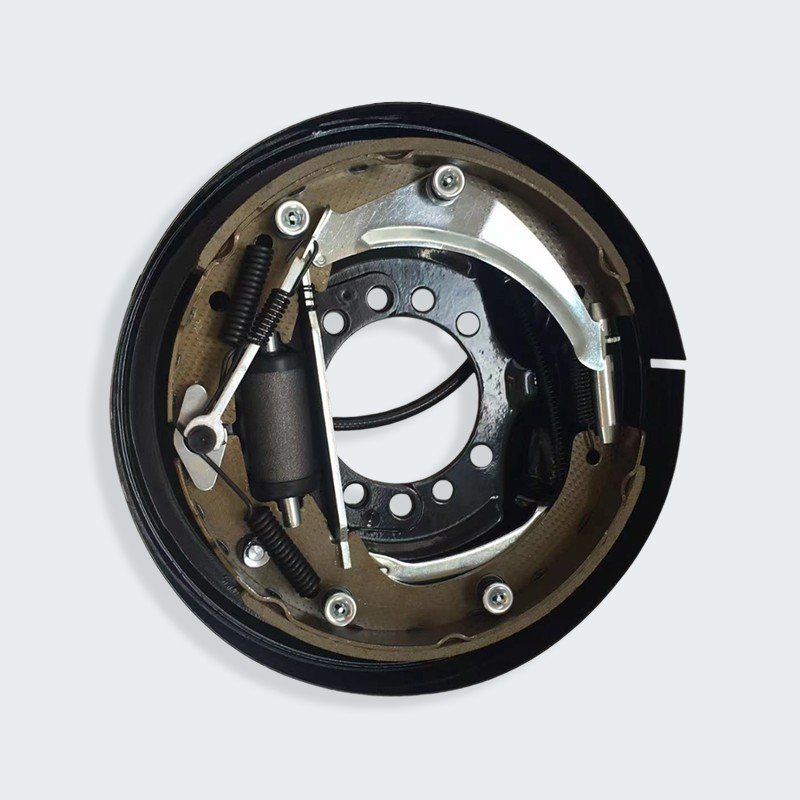 Toyota 8F 2–3 Ton Left Brake AssemblyHydraulic left brake assembly for Toyota 8F 2–3 ton forklifts, including brake shoe and cylinder, with adjustable clearance to help restore braking and reduce downtime.View Product →
Steel Rims Follow the Same Model Logic
Wheel orders fail for the same reason brake orders do. A rim is identified by its size code, its construction and the hub it bolts to. The 5.00-8 split rim covers the 1.5 to 2 ton band; 6.00-9 and 6.50-10 cover 2 to 3 ton trucks; 7.00-12 appears on 4.5 ton split applications; 8.25-15 serves 4 to 5 ton machines, including dual-wheel solid tyre configurations; and one-piece sizes such as 18x7-8, 23x9-10 and 28x9-15 belong to specific chassis families rather than to a tonnage band.
Split and one-piece rims are not substitutes, and neither are single and dual-wheel solid rims, because the offset and the load path differ. Size code plus construction type is the minimum safe identification.
Checking Fit Before the Order Ships
Identification is mostly discipline. Brand series, load class, brake layout, mounting side, and for wheels the rim code and construction — five fields, all obtainable from a data plate and two photographs. Orders that carry all five rarely come back.
For anything ambiguous, send the plate photo together with the old casting number. It is faster than a return, and it keeps a mixed fleet working through the shift instead of waiting on a pallet.
Forklift models reward careful reading. The badge on the counterweight tells you the capacity; the series code, the pump layout and the mounting side tell you the part. Order on the second set, and the first set stops causing trouble.
