
 English
 عربى
عربى

A forklift that starts to stop longer after the brake pedal is pressed is not always a worn lining problem. In many hydraulic braking systems, degraded brake fluid is the hidden cause. The wrong viscosity, excessive moisture, or an overdue fluid change can turn a responsive brake into a soft, dangerous one. This guide looks at what forklift brake fluid is, which specification fits your machine, and how to keep it in serviceable condition.
Content
- 1 What Brake Fluid Does a Forklift Use?
- 2 How Often Should Forklift Brake Fluid Be Replaced?
- 3 How to Check Forklift Brake Fluid Level and Condition?
- 4 What Happens If You Use the Wrong Brake Fluid or Let It Run Low?
- 5 Choosing the Right Forklift Brake Fluid for Your Fleet
- 6 Practical Maintenance Tips for Hydraulic Forklift Brakes
What Brake Fluid Does a Forklift Use?
Forklift brake fluid is a hydraulic transfer medium. When the operator steps on the brake pedal, the master cylinder pushes fluid through brake lines to the wheel cylinders. The cylinders expand the brake shoes or pads against the drum or disc. A counterbalance forklift can produce several tons of braking force, so the fluid must stay nearly incompressible under high pressure and hold its volume over time. The two common specifications in forklift service are DOT 3 and DOT 4. DOT 4 has a higher dry and wet boiling point and better low-temperature viscosity, which makes it a practical default for machines that work both indoors and outdoors. Always check the fluid reservoir cap for the printed specification before adding anything.
| Property | DOT 3 | DOT 4 | DOT 5.1 |
|---|---|---|---|
| Dry boiling point | 205°C | 230°C | 260°C |
| Wet boiling point | 140°C | 155°C | 180°C |
| Water absorption | High | Moderate | Moderate |
| Seal compatibility | Standard | Standard | Standard |
Do not use motor oil, transmission fluid, or silicone-based DOT 5 unless the manufacturer explicitly requires it. Mixing DOT 5 with DOT 3 or DOT 4 can create air pockets, cause seal swelling, and lead to an unsafe pedal feel. The brake cylinder is the component that converts fluid pressure into mechanical force, so its seals must be compatible with the fluid you choose.
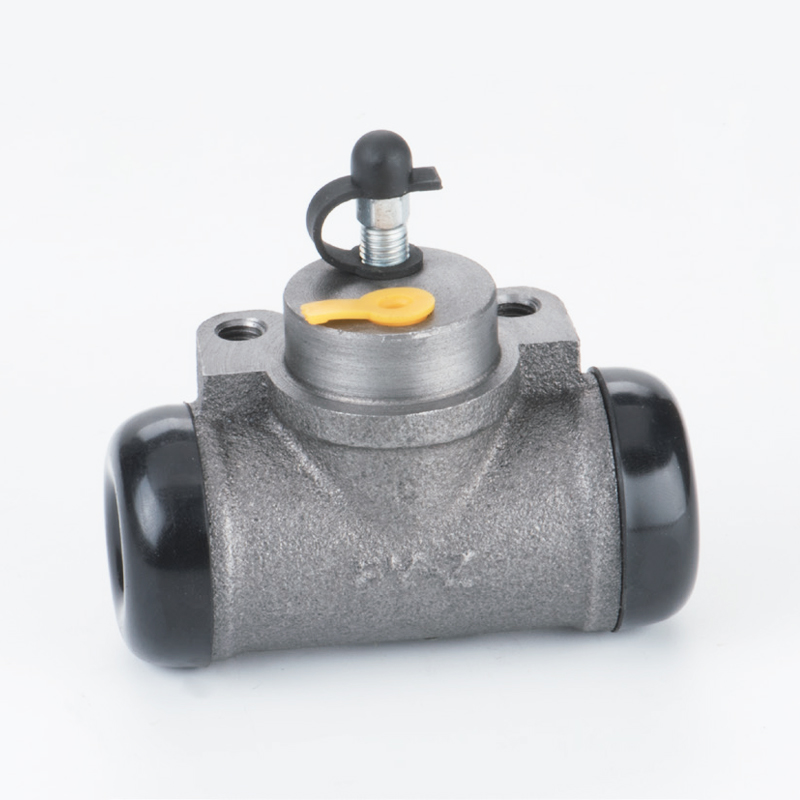 Brake Cylinder for 3-Ton Hangzhou and Heli ForkliftsPrecision-engineered brake cylinder designed for 3-ton Hangzhou and Heli forklifts, featuring corrosion resistance and reliable sealing to maintain hydraulic pressure and ensure safe braking performance in demanding operations.View Product →
How Often Should Forklift Brake Fluid Be Replaced?
Replace the brake fluid every 12 months or every 1,000 operating hours, whichever comes first. In humid, dusty, or outdoor environments, shorten the interval to 6 months or 500 hours. Hydraulic brake fluid is hygroscopic: it draws water from the air through seals, cap ports, and micro-leaks. Moisture lowers the boiling point dramatically. The wet boiling point of DOT 4 is 155°C, compared with 230°C when dry. If the fluid boils during repeated stops, gas bubbles form, the pedal becomes spongy, and stopping distance grows. This is especially dangerous on ramps and grade changes.
Forklifts that lift heavy loads generate high hydraulic pressure in the brake lines. The fluid in the brake cylinders can exceed 100°C during a fully loaded stop. At that temperature, a 3% water content can push the fluid close to the boiling point. Regular fluid replacement is cheaper than replacing master cylinders, wheel cylinders, and brake hoses. If you see early brake failure symptoms like a soft pedal or dragging brakes, refer to this forklift brake failure causes and troubleshooting guide.
How to Check Forklift Brake Fluid Level and Condition?
Checking brake fluid should be part of every forklift pre-shift inspection. Use these steps to confirm the system is in good shape:
- Park the forklift on a level surface, lower the forks, chock the wheels, and apply the parking brake.
- Locate the brake fluid reservoir near the master cylinder or on the frame beside the brake pedal. On some Hangcha and Heli machines, the reservoir is translucent so you can check the level without opening the cap.
- Verify the level is between the MIN and MAX marks. Add the specified fluid only if the level is below MIN, and avoid filling above MAX.
- Inspect color and clarity. Fresh brake fluid is clear amber or pale yellow. Dark brown or cloudy fluid indicates contamination and must be replaced.
- Use a moisture test strip or an electronic brake fluid tester when available. Even fluid that looks clean can be unsafe if it contains more than 3% water.
- Look for leaks around the reservoir cap, master cylinder, brake cylinders, and brake hoses. A wet or stained surface is a red flag that should not be ignored.
What Happens If You Use the Wrong Brake Fluid or Let It Run Low?
Using the wrong fluid can create expensive failures in a short time. A shop that tops up a forklift with silicone DOT 5 fluid when the system requires DOT 4 may see rubber seals swell within hours. That single error can turn into a full brake overhaul. Here are the common failure modes:
- Brake fade: Low boiling point fluid boils under repeated braking, and the pedal can go to the floor.
- Seal swelling: Incompatible fluids attack rubber seals, which causes internal leaks and uneven braking.
- Corrosion: Moisture and acidic by-products pit the metal surfaces of brake cylinders and master cylinder bores.
- Air ingress: A low reservoir lets air enter the brake lines. A spongy pedal and weak stopping power follow until the system is bled.
When the brake fluid is contaminated, the brake shoes and the brake assembly also suffer. In a 3-ton Chinese forklift, the brake assembly itself is a high-wear component that should be inspected together with the fluid and the brake cylinders. If you are replacing the brake cylinder or the entire assembly, choose parts that match the forklift's tonnage and brake type.
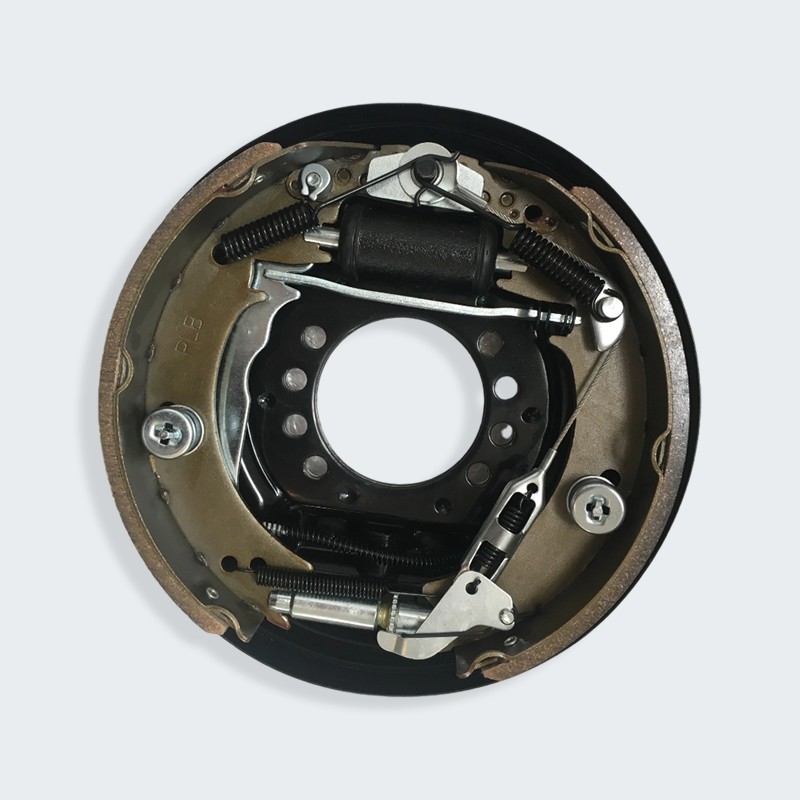 Left Brake Assembly for Hangcha A30 3-Ton ForkliftLeft-side brake assembly specifically for Hangcha A30 3-ton forklifts, optimizing brake response and reducing unilateral wear for stable control in frequent transfer and stacking tasks.View Product →
Choosing the Right Forklift Brake Fluid for Your Fleet
Selecting brake fluid for a mixed fleet starts with the OEM specification. For Hangcha, Heli, Lonking, and most Japanese forklifts, DOT 4 is a practical default unless the manual says otherwise. DOT 3 is acceptable for smaller machines that do not generate much brake heat, but DOT 4 provides a wider safety margin in a loaded fork truck. In cold storage or low-temperature operations, check the fluid's viscosity at -40°C. DOT 4 flows better in cold weather than DOT 3, and a highly viscous fluid can make the pedal stiff in winter.
In high-humidity regions, choose a fluid with a higher wet boiling point. Read the container label carefully. A sealed container is non-negotiable. Once opened, DOT 3 and DOT 4 fluids should be used within 30 days. Buy only the amount you will use at that service interval, and keep the cap closed at all times. When the brakes are serviced, match the fluid with the correct brake shoes and brake cylinders. Browse our complete forklift brake parts range to find brake assemblies, brake shoes and brake cylinders for your specific model.
Practical Maintenance Tips for Hydraulic Forklift Brakes
A few simple habits will extend the reliability of your forklift's hydraulic braking system:
- Bleed the system after every fluid change to remove trapped air. Use a vacuum bleeder or a manual pedal bleed with a clear tube attached to the bleed valve.
- Bleed the farthest wheel cylinder first, then the nearest one. For a forklift with two brake cylinders, start with the rear axle, then the front axle.
- Inspect brake hoses and steel lines for cracks, kinks, or leaks. A small leak at the brake cylinder is more common than a failing fluid pump.
- Clean the reservoir cap before opening it to prevent dust from entering the fluid.
- Check the brake shoe friction surface for contamination. Brake fluid or grease on a lining reduces friction dramatically.
- Keep a service log with fluid changes, moisture tests, and brake shoe wear so you can spot trends and prevent unscheduled downtime.
With the correct fluid, a well-planned replacement schedule, and regular attention to seals and brake cylinders, your forklift's hydraulic braking system will stay predictable and safe for thousands of hours of operation.
